
 Contact
Sunward has always been committed to equipment manufacturing. Sunward puts its focus on launching complete sets of mining equipment for drilling, excavating, breaking, and transporting, to offer integrated mine solutions. Sunward's rock drilling equipments with an excellent performance, were highly recognized by the customer. Especially for the surface blasthole drilling rigs, it takes No.1 market share(more than 70%) in China. Maximize your productivity and profitability with our high performance mining and rock products. Contact us to explore how our advanced mining rock solutions can meet your project needs and elevate your operations to the next level.
mining drill
Our mining drilling equipment, renowned for its reliability and efficiency, is a testament to our commitment to excellence. With over 6,000 employees and a network of more than 200 dealers worldwide, Sunward has a robust presence in the global market. We take pride in our extensive industrial park located in Changsha, spanning 120 hectares, which serves as one of the largest production bases for construction equipment globally.
Sunward's mining sector is managed by Hangang Heavy Industry (Zhejiang) Technology Co., Ltd., specializing in both surface and underground mining equipment and parts. Our flagship products—the SWDB120, SWDB200, and SWDE200—exemplify our dedication to high stability, reduced auxiliary time, and lower drilling tool consumption. These cutting-edge machines are equipped with intelligent control systems and eco-friendly features, ensuring safe, comfortable, and efficient operations across various geological conditions.
As a leading player among mining equipment manufacturers, Sunward is committed to fostering innovation and maintaining our competitive edge in the global mining drilling industry. We continue to export our advanced drilling solutions to meet the evolving needs of our global clientele, ensuring unparalleled performance and reliability.
-

SWDT140* Hydraulic Top-hammer drill rig, 89-140mm
Read more >Drilling method: Top hammer
Hole diameter: 89-140mm
● The SWDT series is the surface top hammer drill rigs with a high-eficiency hydraulic rock drill, with fast drilling rate, low energy consumption, flexible maneuverability and strong -
SWDT115S* Hydraulic Top-hammer drill rig, 89-127mm
Read more >Drilling method: Top hammer
Hole diameter: 89-127mm
● The SWDT series is the surface top hammer drill rigs with a high-eficiency hydraulic rock drill, with fast drilling rate, low energy consumption, flexible maneuverability and strong -
SWDT102SF* Hydraulic Top-hammer drill rig, 76-115mm
Read more >Drilling method: Top hammer
Hole diameter: 76-115mm
● The SWDT series is the surface top hammer drill rigs with a high-eficiency hydraulic rock drill, with fast drilling rate, low energy consumption, flexible maneuverability and strong -
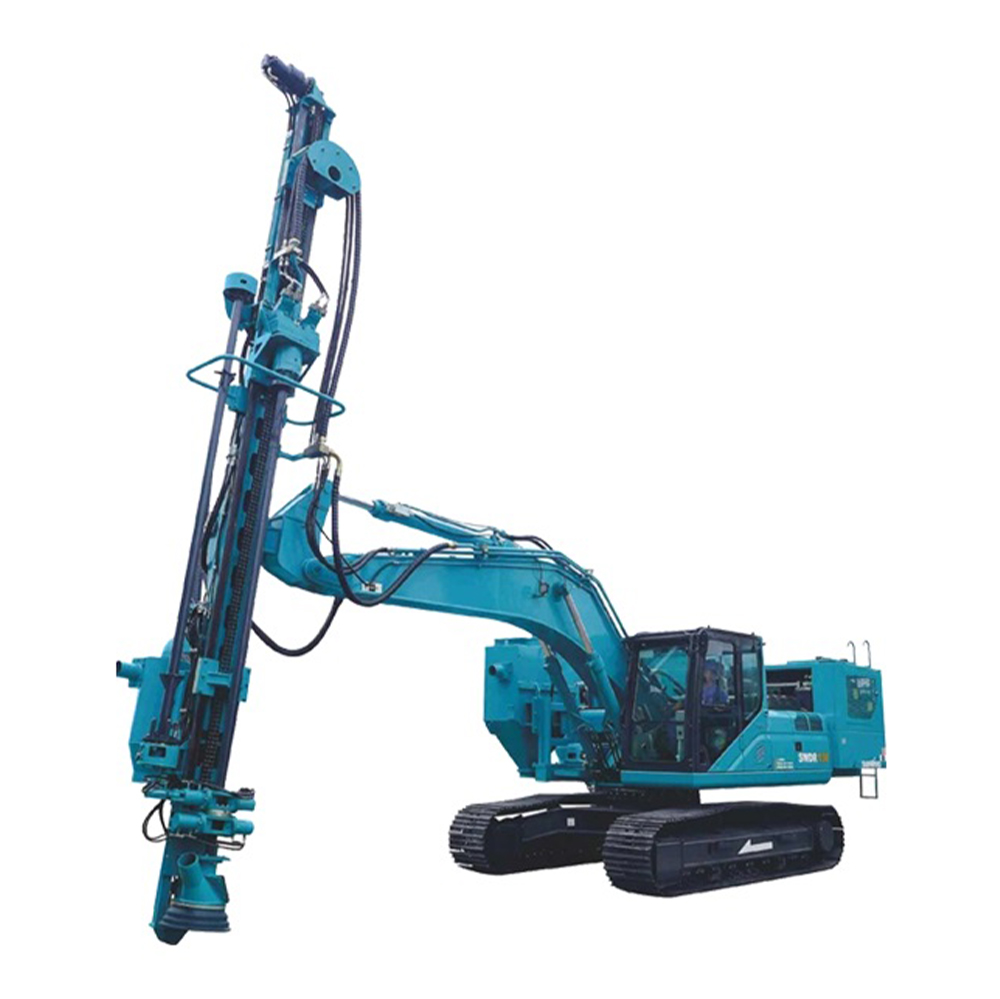
SWDE200RB* Excavator chasis DTH drill rig with the 360° roration
Read more >Drilling method: Down-the-hole
Hole diameter: 165-203mm
DTH-hammer: 6 ,7 and 8 inches-
●TheSWDR series is surface down-the-hole drilling rigs which have a drilling diameter of 105-203mm and a max drilling depth of 30
-
●Meeting the drillingneeds of vertical, inclined and horizontal blasting holes under various geological conditions, with high hole-forming efficiency, low energy consumption and environment-friendly skills.
-
●The uniqueone-click switching between down-the-hole and cutting mode allows drilling operations on both soft and hard rock stratum, which expands the application range, reduces construction costs.
-
-
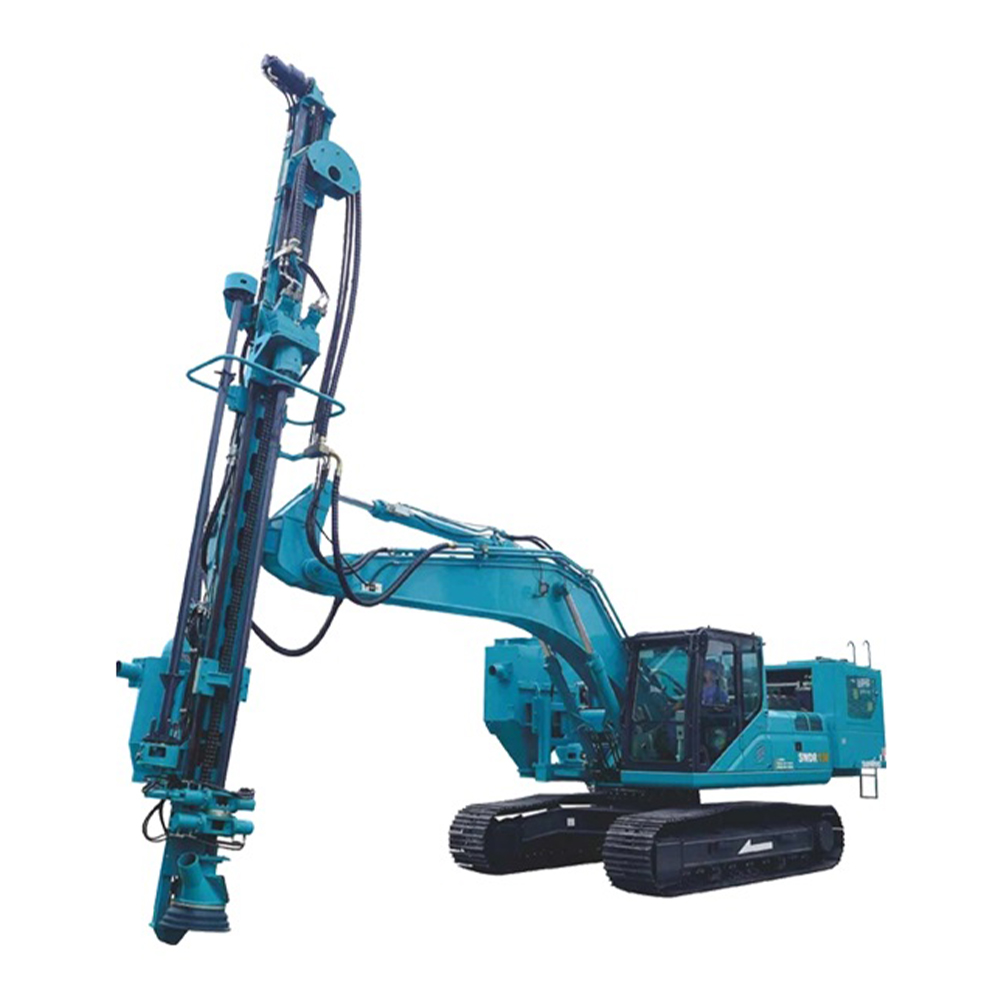
SWDE152RS* Excavator body DTH drill rig
Read more >Drilling method: Down-the-hole
Hole diameter: 115-165mm
DTH-hammer: 4, 5 and 6 inches-
●The SWDE152RB* series is surface down-the-hole drilling rigs which have a drilling diameter of 115-230mm and a max drilling depth of 30
-
●Meeting the drillingneeds of vertical, inclined and horizontal blasting holes under various geological conditions, with high hole-forming efficiency, low energy consumption and environment-friendly skills.
-
●The uniqueone-click switching between down-the-hole and cutting mode allows drilling operations on both soft and hard rock stratum, which expands the application range, reduces construction costs.
-
-

SWDQ120 split DTH drill rig for small quarry
Read more >Drilling method: Separated Down-the-hole
Hole diameter: 90-152mm
DTH-hammer: 3.5, 4 and 5 inches
Engine brand: YuChai
● SWDQ series crawler hydraulic surface down-the hole drilling rig, with comprehensively optimized structure, lower advance cost and more ergonomic design.
● With diesel engine-hydrauic pump unit as power source, the hydrauic motor completes the auxiiary actions such as slewing, propulsion, lifting, traveling and hydrauic oil cylinder swing positioning of the drilling rig.
● The product is mainly used for drling and blasting holes in hydropower projects, open-pit mining and road construction -

SWDQ138 crawler hydraulic DTH drilling rig mainly for drilling and blsthing holes.
Read more >Drilling method: Separated Down-the-hole
Hole diameter: 90-178mm
DTH-hammer: 3.5, 4 and 5 inches
Engine brand: YuChai
● SWDQseries crawler hydraulic surface down-the hole drilling rig, with comprehensively optimized structure, lower advance cost and more ergonomic design.● With diesel engine-hydrauic pump unit as power source, the hydrauic motor completes the auxiiary actions such as slewing, propulsion, lifting, traveling and hydrauic oil cylinder swing positioning of the drilling rig.
The product is mainly used for drling and blasting holes in hydropower projects, open-pit mining and road construction -
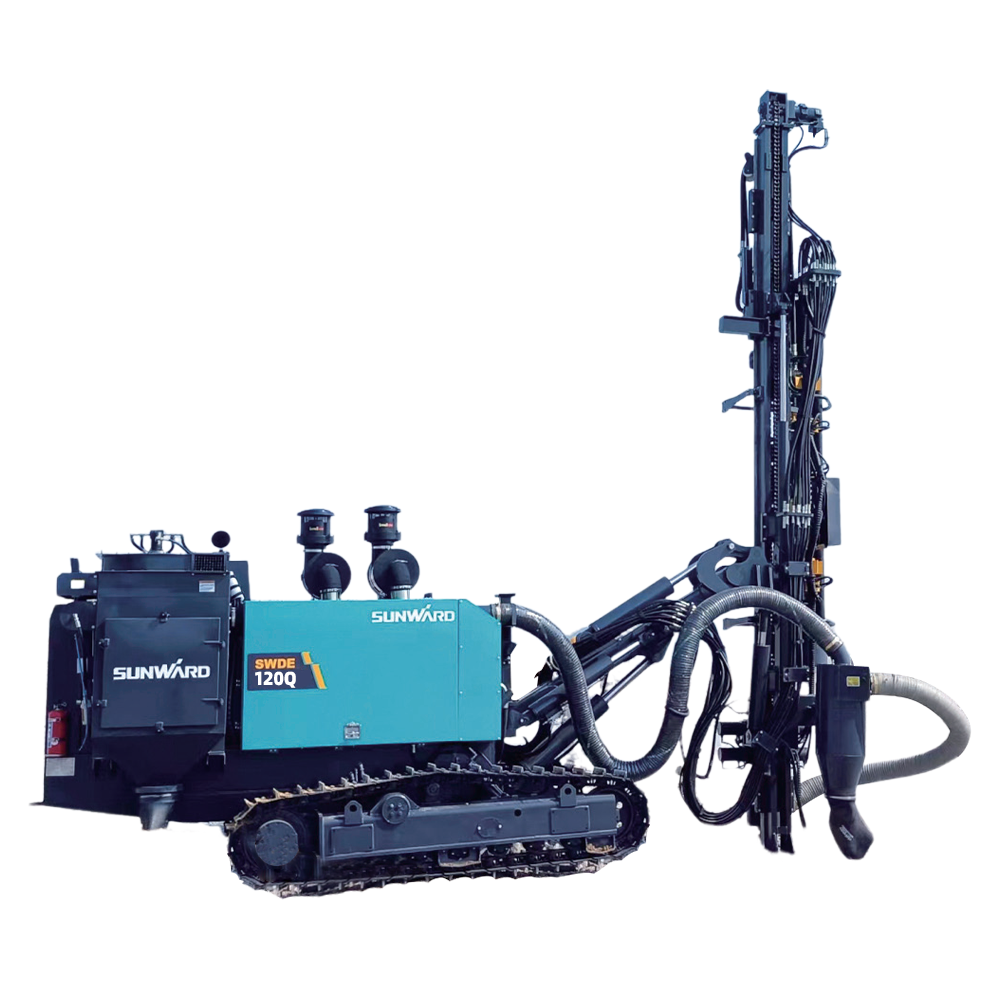
SWDE120Q DTH drill rig (without cabin), 90-115mm
Read more >Drilling method: Down-the-hole
Hole diameter: 90-138mm
DTH-hammer: 3.5 and 4 inches
●TheSWDE series is surface down-the-hole drilling rigs which have a drilling diameter of 90-230mm and a max drilling depth of 36m.- ●Meeting the drillingneeds of vertical, inclined and horizontal blasting holes under various geological conditions, with high hole-forming efficiency, low energy consumption and environment-friendly skills.
- ●The uniqueone-click switching between down-the-hole and cutting mode allows drilling operations on both soft and hard rock stratum, which expands the application range, reduces construction costs.
-

SWDE138Q DTH drill rig (without cabin), 90-138mm
Read more >Drilling method: Down-the-hole
Hole diameter: 90-152mm
DTH-hammer: 3.5、4 and 5 inches-
●The SWDE series is surface down-the-hole drilling rigs which have a drilling diameter of 90-230mm and a max drilling depth of 36m.
-
●Meeting the drillingneeds of vertical, inclined and horizontal blasting holes under various geological conditions, with high hole-forming efficiency, low energy consumption and environment-friendly skills.
-
●The uniqueone-click switching between down-the-hole and cutting mode allows drilling operations on both soft and hard rock stratum, which expands the application range, reduces construction costs.
-
-

SWDE152Q DTH drill rig (without cabin), 90-152mm
Read more >Drilling method: Down-the-hole
Hole diameter: 90-165mm
DTH-hammer: 3.5、4 and 5 inches-
●The SWDE series is surface down-the-hole drilling rigs which have a drilling diameter of 90-230mm and a max drilling depth of 36m.
-
●Meeting the drillingneeds of vertical, inclined and horizontal blasting holes under various geological conditions, with high hole-forming efficiency, low energy consumption and environment-friendly skills.
-
●The uniqueone-click switching between down-the-hole and cutting mode allows drilling operations on both soft and hard rock stratum, which expands the application range, reduces construction costs.
-
-
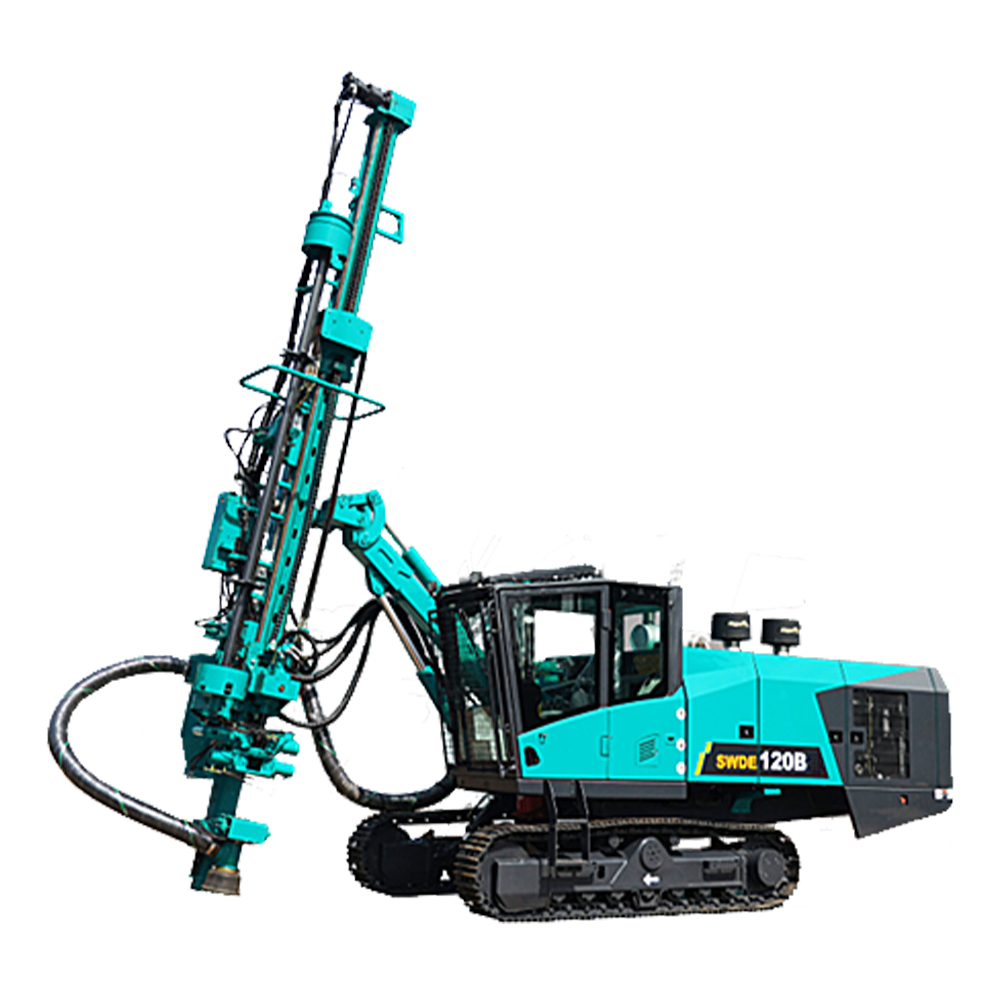
SWDE120B Boom-type DTH machine, 90-138mm
Read more >Drilling method: Down-the-hole
Hole diameter: 90-138mm
DTH-hammer: 3.5, 4 and 5 inches
●The SWDE series is surface down-the-hole drilling rigs which have a drilling diameter of 90-230mm and a max drilling depth of 36m.
●Meeting the drilling needs of vertical,inclined and horizontal blasting holes under various geological conditions, with high hole-forming efficiency, low energy consumption and environment-friendly skills.
●The unique one-click switching between down-the-hole mode and cutting mode allows drilling operations on both soft and hard rock stratum, which expands the application range, reduces construction costs and improves construction efficiency. -

SWDE138B Boom-type DTH drilling machine, 115-152mm
Read more >Drilling method: Down-the-hole
Hole diameter: 115-152mm
DTH-hammer: 4 and 5 inches
● The SWDE series is surface down-the-hole drilling rigs which have a drilling diameter of 90-230mm and a max drilling depth of 36m.
● Meeting the drilling needs of vertical,inclined and horizontal blasting holes under various geological conditions, with high hole-forming efficiency, low energy consumption and environment-friendly skills.
● The unique one-click switching between down-the-hole mode and cutting mode allows drilling operations on both soft and hard rock stratum, which expands the application range, reduces construction costs and improves construction efficiency.
The Frequent FAQs of Products
What is a Mining Drill?▾
History and Evolution
The simplest form of a mining drill was nothing more than a long chisel or drill steel struck repeatedly with a sledgehammer. This manual method was described vividly by Mark Twain, who noted the strenuous nature of holding an iron drill in place while another person struck it with a heavy sledgehammer. This labor-intensive process could only produce a limited depth of a couple of inches per hour. Around the turn of the 20th century, power-driven drills started to replace these manual methods, marking a dramatic shift in mining efficiency and capability.
The first steam drill, developed in 1813, marked the beginning of mechanized drilling. Although it found more application in surface quarries due to the proximity needed to boilers, it was a significant improvement over hand-operated methods. By the late 19th century, pneumatic drills and eventually hydraulic and electrically powered drills became standard, dramatically increasing the speed and efficiency of the drilling process.
Mechanisms and Configurations
Modern mining drills come in two primary forms: percussion drills and rotary drills. Percussion drills operate using a reciprocating motion that strikes the rock repeatedly, while rotary drills use a continuous rotational movement to grind the rock away. Smaller handheld percussion drills, often considered types of jackhammers, are used for more manageable tasks, whereas larger, machine-mounted drills undertake extensive mining operations.
These drilling machines can be powered through various means including compressed air (pneumatics), hydraulics, steam, or electricity. Each type has specific advantages and applications depending on the mining conditions and requirements. For instance, pneumatic drills are highly valued in underground mines where electric power may not be readily available or could pose a risk due to explosive gases.
Drill Bits and Wear
The choice of drill bit is crucial in mining drilling, as rock is inherently hard and can quickly wear out standard steel bits. To mitigate this, drill bits are often tipped with hard materials like tungsten carbide or diamond coatings. These materials prolong the bit's life and improve the efficiency of the drilling process. Tungsten carbide inserts can be replaced as they wear away, ensuring a consistent drilling performance. Rotary rock drills, particularly, benefit from diamond-coated bits, where the harder diamond material protrudes as the softer matrix wears away, maintaining the bit’s effectiveness.
Health and Safety Considerations
All rock drilling generates dust, which poses serious health hazards such as silicosis for miners. Modern mining drills address this issue by flooding the borehole with water to capture dust particles, thereby improving air quality. This practice also has the added benefits of lubricating and cooling the drill bit, extending its operational life and effectiveness.
Conclusion
The mining drill is a pivotal tool that has revolutionized the mining industry. From its early manual forms to the advanced, power-driven machines used today, mining drills have significantly enhanced mining operations' efficiency, safety, and capability. Understanding the various types, configurations, and innovations in drill bit technology provides a comprehensive overview of what a mining drill is and its indispensable role in modern mining practices.
What is the Mining Drill good for?▾
Precision and Efficiency in Resource Extraction
One of the most significant advantages of using a mining drill is the precision and efficiency it offers in resource extraction. Advanced technology allows these drills to accurately target and penetrate resource-rich areas, minimizing waste and maximizing output. This level of precision is crucial, especially when dealing with valuable minerals like gold, platinum, and rare earth elements where even a small loss can translate into significant financial setbacks. The efficiency of mining drills not only boosts productivity but also ensures that mining operations are economically viable in the long term.
Enhanced Safety for Workers
Mining has historically been a dangerous occupation, with substantial risks posed by cave-ins, gas explosions, and other underground hazards. The advent of modern mining drills has dramatically improved safety conditions for miners. These drills are often operated remotely or autonomously, reducing the need for human presence in hazardous zones. Additionally, they are equipped with sensors and real-time monitoring systems that can detect and alert operators to potential dangers, allowing for preemptive measures to be taken. This proactive approach significantly reduces the likelihood of accidents, safeguarding the lives and well-being of mining personnel.
Versatility Across Various Industries
Mining drills are not confined to the extraction of precious metals and minerals; their versatility spans across multiple industries. The construction sector, for instance, relies heavily on mining drills for foundational work, tunneling, and site preparation. In the energy sector, these drills are essential for accessing underground reservoirs of oil, natural gas, and geothermal energy. Furthermore, environmental and geological research employs mining drills to obtain core samples, helping scientists understand earth processes and assess environmental impacts. This wide-ranging applicability underscores the vital role that mining drills play in advancing both industrial and scientific endeavors.
Technological Advancements and Innovation
Continuous innovation in the design and functionality of mining drills has paved the way for more sophisticated and efficient models. Modern drills are often integrated with cutting-edge technologies such as AI, IoT, and robotics. These advancements have led to the development of smart drills that can adapt to different geological conditions, optimize drilling parameters in real-time, and even perform self-diagnosis and maintenance. Such technological strides ensure that mining drills are not only more productive but also more reliable and cost-effective, meeting the evolving demands of the mining industry.
Environmental Considerations
While mining has historically been associated with environmental degradation, modern mining drills are designed with sustainability in mind. Manufacturers are increasingly focusing on reducing the environmental footprint of drilling activities. Innovations such as low-emission engines, noise reduction technologies, and environmentally friendly lubricants help mitigate the impact of mining operations. Additionally, precision drilling minimizes surface disruption and reduces the need for extensive excavation, preserving the surrounding ecosystem. These environmentally conscious approaches demonstrate that mining drills can contribute to more sustainable mining practices.
In conclusion, the mining drill is a cornerstone of modern industry and resource management, offering unparalleled benefits in terms of precision, efficiency, safety, versatility, innovation, and environmental sustainability. The continuous advancement and refinement of these tools by leading manufacturers ensure that they remain integral to the progress and sustainability of various industries, making them indispensable in our quest to harness the earth's resources responsibly and efficiently.
How deep do mining drills go?▾
Understanding Drilling Depths
The depth to which mining drills can penetrate varies significantly based on the type of drill and the method of drilling employed. On average, modern mining drills are capable of reaching depths ranging from several hundred meters to over 3,000 meters. These depths are achieved through a combination of rotary and percussive drilling techniques, each suited to specific geological conditions. Rotary drills, for instance, are often used for softer rock formations and can reach considerable depths efficiently, while percussive drills are better for harder rock and are typically used in shallower applications.
Technological Advancements and Capabilities
In recent years, technological advancements have dramatically enhanced the capabilities of mining drills. High-precision equipment, such as down-the-hole (DTH) drills and diamond core drills, are now commonplace in the industry. DTH drills are particularly noted for their ability to achieve significant depths with great accuracy, making them ideal for deep mining operations. These drills utilize a pneumatic hammer directly behind the drill bit, facilitating deeper penetration through hard rock formations.
Diamond core drills, on the other hand, are used primarily for exploration drilling and can reach depths of over 2,000 meters. These drills cut a cylindrical core of rock, providing valuable geological information. The cores extracted are crucial for assessing the presence and quantity of mineral resources, informing subsequent mining operations.
Geological and Environmental Constraints
While technological advancements have pushed the boundaries of how deep mining drills can go, geological and environmental factors impose certain limitations. The type of rock, its stability, and the presence of water or gas can all affect drilling depth. For example, unstable rock formations may require additional reinforcement, which can slow down the drilling process and limit depth. Similarly, drilling in water-saturated rock requires specialized equipment and techniques to manage water inflow.
Environmental considerations also play a crucial role. Regulations and environmental impact assessments often dictate the extent and methods of drilling activities to mitigate ecological damage. Responsible mining practices are essential to ensure that deep drilling operations do not adversely affect surrounding ecosystems or groundwater resources.
Innovations and Future Prospects
The future of mining drills is poised for exciting innovations, driven by the demand for deeper and more efficient resource extraction. Automation and remote-controlled drilling technologies are becoming increasingly prevalent, allowing for greater precision and safety in deep mining operations. These technologies not only improve the depth and efficiency of drilling but also enhance worker safety by reducing the need for human presence in hazardous conditions.
Additionally, advancements in materials science are leading to the development of more durable and efficient drill bits, capable of withstanding the extreme pressures and temperatures encountered at greater depths. These innovations promise to further extend the reach of mining drills, opening up new possibilities for resource extraction.
Conclusion
The depths that mining drills can achieve are a testament to human ingenuity and technological progress. Modern drilling equipment, supported by continuous innovations, allows for the extraction of minerals from ever-greater depths. While geological and environmental factors present challenges, advancements in technology and responsible mining practices ensure that these challenges are met with effective solutions. As the industry continues to evolve, the capabilities of mining drills will undoubtedly expand, unlocking new resources and opportunities for the future.
What is the purpose of drilling in mining?▾
● Exploration and Discovery
At the initial stages of mining, drilling is employed for exploration and prospecting. This involves searching for mineral deposits by retrieving subsurface samples. Various geological methods are applied simultaneously, including visual examination by geologists, geophysical survey techniques by geophysicists, and geochemical analyses of soil, rock, and water samples. Drilling is instrumental in penetrating deep into the earth and bringing up samples that reveal the presence of mineralization far beneath the surface. There are two main drilling methods used at this stage: core drilling and percussion drilling. Core drilling retrieves solid, cylindrical samples, allowing for a precise examination of the subsurface geology. Percussion drilling, or Reverse Circulation (RC) drilling, produces crushed rock samples that help determine the depth at which mineralization occurs. These methods collectively provide a comprehensive understanding of the underground structure and potential mineral deposits, enabling informed decision-making regarding further exploration efforts.
● Defining the Mineral Resource
Once potential mineralization is identified, drilling continues to define the size, shape, and grade of the deposit. Core drilling is particularly important at this stage as it provides intact geological samples, allowing geologists to thoroughly examine the rock's nature and any associated mineralization. By obtaining detailed geological information, mining drill manufacturers can assist companies in calculating the ore reserves, which are crucial for the mine's operational and economic sustainability. This step-by-step exploration process ensures that only deposits with a high likelihood of being economically viable progress to the development phase. The ultimate goal is to gather sufficient data to create a clear financial picture of the deposit, ensuring that it meets the criteria for profitable extraction.
● Enabling Efficient Extraction
The data gathered from drilling is not limited to exploration and resource definition; it also plays a vital role during the development and extraction phases. Drilling data helps in designing mine layouts and planning extraction methods that maximize efficiency and safety. For instance, strategically placed underground drill holes can intercept new ore bodies, providing additional resources and extending the mine's life. Furthermore, information obtained from drilling contributes to the development of robust mine plans that optimize the ratio of waste to ore, ensuring sustainable extraction practices.
● Technological Advances and Automation
The evolution of technology and automation has significantly enhanced the drilling process, making it more efficient, precise, and safe. Modern control systems and automated drilling functions have revolutionized traditional methods, alleviating the physical and psychological demands on operators. Automation enhances the accuracy of drilling operations, ensures compliance with safety standards, and allows for continuous operation even in harsh environmental conditions. These advancements have made it feasible to undertake exploration projects in challenging terrains, thus expanding the potential for discovering new mineral resources.
● Conclusion
Drilling in mining is a multifaceted process with numerous objectives, all aimed at transforming geological data into actionable insights that drive the efficient and economic extraction of minerals. From initial exploration to defining ore bodies and enabling effective mining operations, drilling is indispensable to the industry's success. Mining drill manufacturers play a crucial role in providing the advanced equipment and technologies necessary to carry out these intricate tasks, ensuring that the mining sector continues to thrive in an increasingly competitive and resource-driven world.
What is the difference between drilling and mining?▾
Definition and Purpose
Drilling and mining are fundamental practices in the resource extraction industry, yet they serve distinct purposes. Drilling primarily involves creating holes in the earth's surface to explore and extract subsurface fluids, such as oil, gas, or groundwater. The process is often employed in the petroleum industry to tap into reservoirs located deep within the earth. Conversely, mining is the extraction of solid minerals or other geological materials from the earth. This can include metals, coal, gemstones, and other valuable resources, which are mined from ore bodies, lodes, veins, seams, or coal beds.
Techniques and Equipment
The techniques and equipment used in drilling and mining are tailored to their specific tasks. Drilling involves the use of drilling rigs that can vary in size from small, portable units to massive structures. The primary tool, the drill bit, penetrates the earth, creating a borehole. Technology and precision are paramount, especially when drilling into complex geological formations. On the other hand, mining encompasses various forms – surface mining, underground mining, and placer mining. Each method employs different equipment, such as bulldozers, excavators, and mining drills. Mining operations are often more extensive, involving significant earth-moving activities and the extraction of large volumes of materials.
Process Complexity and Duration
The complexity and duration of processes in drilling and mining also mark a distinction. Drilling projects can be relatively swift, depending on the depth and geological conditions. Exploratory drilling may be brief, while production drilling for oil or gas extraction can last for years. The process includes stages like site preparation, drilling, casing, completion, and production. Mining, particularly large-scale operations, is generally more time-consuming and complex. It includes stages like exploration, development, extraction, and reclamation. The lifecycle of a mining project can span decades, from initial surveys to the decommissioning and rehabilitation of the mine site.
Environmental Impact
Environmental impact is a critical consideration differentiating drilling and mining. Drilling, although potentially invasive, tends to have a smaller footprint compared to mining. Nevertheless, it can still lead to issues such as groundwater contamination, habitat disruption, and spills of hazardous materials. Mining activities, especially open-pit mining, can have a more substantial environmental footprint. This includes deforestation, land degradation, and the generation of large amounts of waste materials. Both industries implement various strategies to mitigate their environmental impacts, such as advanced technology, stricter regulations, and sustainable practices.
Economic and Social Impact
The economic and social impacts of drilling and mining are profound and multifaceted. Drilling projects often contribute significantly to local economies through job creation, infrastructure development, and increased revenue. However, they can also lead to socio-economic challenges, such as disruption to local communities and uneven wealth distribution. Mining, given its scale, often has a more extensive economic impact, supporting entire regions through employment, community development programs, and long-term economic contributions. Social impacts include displacement of communities, health and safety concerns, and potential conflicts over resource ownership and usage.
Conclusion
Both drilling and mining are indispensable to modern society, facilitating the extraction of vital resources that drive technological and economic progress. While drilling focuses on accessing subsurface fluids with precision and technology, mining involves the large-scale extraction of solid minerals through extensive operations. Understanding these differences is essential for professionals in the field, policymakers, and the public to appreciate the complexities and significance of these activities in our global economy. Through continued advancements and responsible practices, both industries can aim for sustainable resource extraction, balancing economic benefits with environmental stewardship and social responsibility.
How deep does mining go?▾
● The Evolution of Mining Depths
Historically, mining was largely restricted to shallow depths where ore bodies were easily accessible through surface prospecting and basic excavation methods. However, diminishing surface deposits have driven the industry to explore deeper regions of the Earth. Mines routinely reach depths of around 1000 meters, but operations extending beyond this mark are increasingly common, with a few exceptional cases delving to nearly 4000 meters. These ultradeep mines represent the pinnacle of mining engineering, involving complex logistical and technological efforts.
● Technological Challenges and Solutions
Mining at great depths presents a host of challenges, primarily due to increased temperature and pressure. The geothermal gradient causes temperatures to rise approximately 25°C per kilometer, necessitating advanced cooling systems to keep working conditions safe. Similarly, pressure increases by about 35 million pascals per kilometer, posing risks of rock bursts and tunnel collapses. These conditions require robust reinforcement techniques, such as the use of concrete linings and rebar, to ensure the stability of mining operations.
Furthermore, the logistical complexities of transporting personnel, equipment, and ore through extensive and often convoluted tunnel systems cannot be understated. Advanced drilling technologies, exemplified by mining drill manufacturers, play a crucial role in deep mining operations. The precision and power of these drills are paramount in navigating the intricate geology of ultradeep mines, ensuring that mining activities remain efficient and safe.
● Exploration and Prospecting
Detecting deeply buried ore deposits becomes exponentially more difficult as depths increase. Traditional methods like surface prospecting are no longer feasible, and geophysical techniques, while useful, face limitations in resolution and depth penetration. Airborne gravity and magnetic surveys, once the mainstay of exploration, have reduced efficacy at greater depths. Consequently, drilling becomes indispensable, albeit more challenging. Deep drilling requires advanced equipment capable of maintaining precision under extreme conditions, a domain where leading mining drill manufacturers excel.
● Economic Viability and Risks
Ultradeep mining is not only technically demanding but also financially significant. The substantial capital investment required to develop and maintain deep mining infrastructure means that only exceptionally rich deposits justify such ventures. Mines at these depths often need to demonstrate substantial profitability to attract investment, a challenging prospect given the mounting costs and risks.
The economic viability of deep mining operations often depends on continuous advancements in technology. Automation and remote operation capabilities introduced by mining drill manufacturers enhance safety and efficiency, reducing the human risk factor associated with extreme depths. Despite these innovations, the cumulative risks—ranging from mechanical failures to seismic activities—can render mining below 4000 meters economically unfeasible for most projects.
● Future Prospects
While there is no definitive limit to how deep mining can go, current technological and economic conditions suggest a practical ceiling around 4000 meters for profitable resource extraction. Continued innovation in drilling and mining technologies will be crucial in extending these boundaries. The role of mining drill manufacturers remains integral as their cutting-edge solutions pave the way for deeper and safer mining operations.
In conclusion, the quest to mine deeper reveals a landscape fraught with challenges and underpinned by technological advancements. As surface resources dwindle, the mining industry must continually adapt, leveraging the expertise and innovations of mining drill manufacturers to push the limits of resource extraction deeper into the Earth's crust.
We know your industry. Let us help you.

Epiroc covers all mining applications through a global network


RELATED
Hot Products Sitemap Special mining tools and equipment drilling rig machine drilling machine for sale dump trucks equipment hub drill rigs hydraulic drill rigsCONTACT US
Address: Room 2001, Building 2, Chaolonghui Building, Yingfeng Street, Xiaoshan District, Hangzhou City, Zhejiang Province
Phone: 008615221379190 cloud@sunwardmining.com Whatsapp: 008615221379190 Facebook
 LinkedIn
 Instagram
 YouTube
Copyright © Hanggang Heavy Industry (Zhejiang) Technology Co., Ltd
 Submit here
 Privacy settings