
 Contact
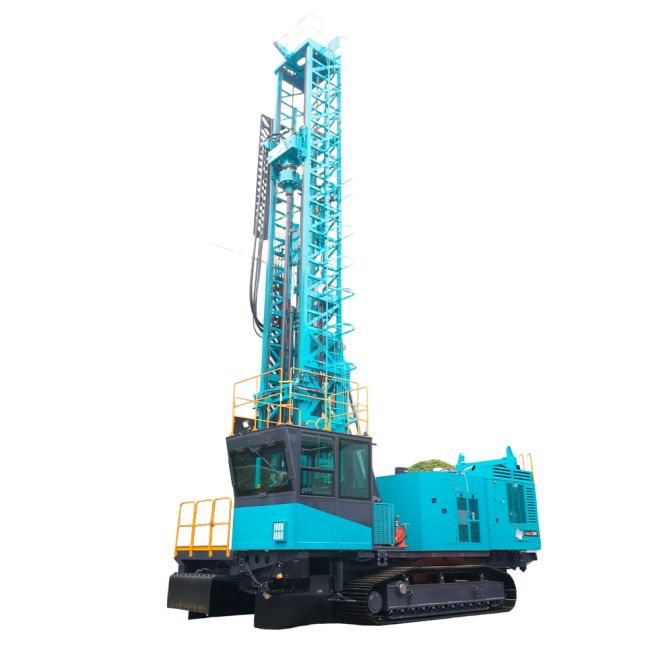
Introduction to drill rig drifters
In the mining and construction industries, drill rig drifters play a crucial role in rock drilling. As a key component of drilling machines, drifters are essential for delivering rapid and repetitive percussive forces to drill bits, facilitating efficient penetration into hard rock surfaces. Whether used in mining, tunneling, or quarrying, drill rig drifters have become invaluable assets due to their high performance and adaptability.
Types of Drill Rigs with Drifters
Top-Hammer Drills
Top-hammer drills are characterized by their placement of the drifter outside the hole. This configuration allows for larger drifters, as size is not restricted by borehole diameter. The energy is transmitted from the drifter located at the top of the drill string down to the drill bit, which makes it ideal for applications requiring high percussive power but limited by depth efficiency.
Down-the-Hole (DTH) Drills
DTH drills feature a drifter located at the bottom of the hole. This allows the percussive force to be applied directly to the drill bit, maintaining consistent performance regardless of depth. Though size constraints exist, the lower energy loss makes DTH drills suitable for deep drilling operations.
Mechanical Operation of Drifters
Conversion of Power
Drifters convert hydraulic or pneumatic power into mechanical percussive force. This transformation is achieved by a piston mechanism within the drifter, which delivers cyclical shock waves to the drill bit, enabling effective rock penetration.
Energy Transmission
The efficiency of energy transmission in drifters depends on several factors, including the design of the piston, the diameter of the drill string, and the contact between the bit and rock. Optimal energy transmission is crucial for maximizing drilling performance and productivity.
Placement and Impact of Drifters
Role of Percussive Energy
The primary function of a drifter is to generate percussive energy, which is then transmitted to the drill bit. This energy is crucial for breaking down rock into manageable fragments, facilitating further drilling operations. The percussive process is highly efficient in fast-penetration applications.
Impact on Bedrock
The impact generated by the drifter causes stress waves along the drill string, which crushes and pulverizes the bedrock. Consistent contact between the drill bit and rock is essential for effective energy transmission and optimal performance.
Advantages and Disadvantages of Top-Hammer Drills
Pros
- Greater flexibility in size due to external drifter placement
- Optimized piston design for efficient energy transmission
- Capability to use advanced hydraulic power for improved performance
Cons
- Decreased impact energy with increasing depth
- Limited efficiency in very deep drilling operations
Advantages and Disadvantages of DTH Drills
Pros
- Stable output performance irrespective of depth
- Wide borehole and drill string diameter options
- Precision in maintaining straight, deep holes
Cons
- Size constraints due to the drifter's location at the bottom of the hole
Innovations in Drifter Technology
Technological Advancements
Modern drifters are evolving with new technologies such as automated control systems, real-time monitoring, and energy-efficient designs. Innovations like the Dual-Damper System enhance performance, especially in difficult rock conditions, leading to faster drilling with minimal energy loss.
Improved Capabilities
Advanced drifters are now capable of handling larger diameter holes and operating efficiently in various orientations. This versatility is attributed to enhanced designs that incorporate sophisticated control mechanisms for adjusting parameters like frequency and impact force.
Hydraulic Drifters in Modern Drilling
Power Systems
Hydraulic drifters utilize a hydraulic power unit (HPU) to generate the required pressure for operation. The hydraulic fluid, typically oil, is pressurized and controlled through valves, powering a piston to drive the drill bit with mechanical force.
Versatility and Efficiency
With capabilities for rotation and feeding mechanisms, hydraulic drifters offer versatile solutions for directional drilling applications. Modern hydraulic systems allow for adjustable parameters and real-time monitoring, improving both precision and efficiency.
Applications of Drifter Drilling Machines
Underground Mining
Drifter drilling machines are widely used in underground mining for tasks like rock bolting and roof reinforcement. Their robust design and high-speed drilling capabilities enable effective operation in confined spaces.
Tunneling and Quarrying
In tunneling and quarrying projects, drifter machines facilitate efficient drilling through hard rock, ensuring productivity and safety. The adaptability of these machines makes them suitable for a variety of construction applications.
Future Directions for Drifter Technologies
Continued Development
As technology progresses, manufacturers are focusing on refining drifter systems to enhance performance and sustainability. This includes integrating eco-friendly practices, utilizing advanced materials, and employing automated technologies to reduce human intervention.
Market Trends
The demand for drifters is expected to grow, driven by increasing infrastructure projects worldwide. Wholesale suppliers and manufacturers are responding by improving supply chains and expanding production capabilities to meet diverse industry needs.
Sunward Provide Solutions
Sunward is committed to offering comprehensive solutions in the field of drilling technology. As a supplier, we provide high-performance drifter systems that meet industry standards and exceed customer expectations. Our dedication to quality ensures our products deliver optimal performance, reliability, and efficiency for all drilling applications, making us a preferred manufacturer in the market. Partner with us for tailored solutions that drive productivity and ensure success in your drilling projects.
 Facebook
 LinkedIn
 Instagram
 YouTube
 Submit here
 Privacy settings